
Iridio℠ by RRD’s latest research reveals how changing consumer behaviors, marketing shifts, and operational realities are reshaping grocery and CPG
Value-conscious shoppers are becoming more deliberate about where they shop, what they buy, and how much effort they put into finding savings. Simultaneously, physical and digital shopping behaviors continue to converge, creating new challenges for grocery retailers and CPG brands.
New Iridio by RRD research examines how these shifts are influencing U.S. consumers and decision-makers in the grocery, CPG, and mass retail sectors.
Report Highlights
01 The value-seeking shopper is the new baseline
Price pressure has fundamentally altered consumer behavior and eroded traditional brand loyalty. Instead of simply absorbing higher costs, shoppers are comparing stores, seeking promotions, and reconsidering purchases to stretch household budgets.
Grocers and CPG brands can no longer rely on legacy brand equity alone to maintain market share. They should instead work to capture shopper attention before trip planning occurs through targeted, localized promotional strategies and direct-to-home physical coupons.
Younger generations alter shopping behavior
86% of Gen Z respondents and 81% of millennial respondents report that they’ve reduced or eliminated spending due to grocery costs.
Price sensitivity drives new shopping habits
When asked to rank the most influential factors when choosing a grocery store, consumers most frequently stated low pricing — 71%
Higher grocery costs affect lifestyle spending
78% of shoppers have reduced or eliminated spending in at least one area because of grocery costs:
Physical touchpoints still influence impulse purchases
Nearly two-thirds of consumers (65%) report at least occasionally making an unplanned purchase because of in-store displays, signs, or product packaging.
Expert take

“We’ve reached a tipping point where saving money on food has become a second job for many households. Consumers are willing to trade their personal data, time, and brand loyalty, but only if retailers give them tangible, real-time value in return. The brands that win tomorrow will be those that solve this efficiency crisis for shoppers on the shelf."
— Beth Johnson, Director of Vertical Strategy, Grocery, RRD
02 Consumers are paying a “time tax” to afford groceries
Managing grocery budgets has become a time-intensive household commitment. Consumers are paying for elevated food costs with their money — and with significant personal time spent searching for value.
Brands that work to reduce this time tax can streamline the shopper journey and win preference. Integrating clear in-aisle promotional signage, scannable smart packaging, and personalized digital coupon alerts can simplify deal-finding for consumers during physical store visits.
Shoppers spend time maximizing budgets
79% of adults spend additional time each week trying to save money on groceries compared to three years ago.
Cost anxiety affects budget management
53% of consumers say concerns about costs have at least somewhat changed how they plan meals or manage grocery budgets. Among consumers who have changed their approach:
Consumers increase reliance on promotions
Expert take

“Consumers are spending up to an extra hour each week trying to find grocery savings, creating friction in the shopper journey. Brands that deploy personalized promotions on frequent purchases and clear, net-price shelf tags can help eliminate aisle math and ease shoppers’ mental fatigue. This strategy passes savings along to the customer, slashes pre-trip planning time, and can reinforce brand loyalty.”
— Michelle Garcia, Director of Integrated Strategy, Iridio by RRD
03 Omnichannel fulfillment is colliding with inventory realities
As hybrid fulfillment formats like click-and-collect, curbside pickup, and home delivery become commonplace, backend disconnects can create profit margin and customer satisfaction risks.
With 51% of consumers at least occasionally using a grocery store app while actively shopping in-store, out-of-stock items can erode consumer trust and lead to sales loss.
Forward-thinking organizations should prioritize modernizing inventory data tracking and invest in durable secondary packaging and smart labeling solutions (such as RFID technology and localized barcodes). This can support accurate, real-time fulfillment across physical and digital storefronts, avoiding critical omnichannel friction points.
Fulfillment growth impacts packaging and labeling
Nearly all (99%) of retail decision-makers say the growth of curbside pickup and delivery has impacted their packaging and labeling requirements, with 44% reporting a major impact
Inventory gaps create omnichannel friction
Inventory data lag:
35% of retail executives admit that slow inventory data causes products to be sold online when they are already out of stock on physical store shelves.
Top operational obstacle:
Retail decision-makers identify inventory inaccuracy across digital and physical shelves as their single biggest hurdle to executing an omnichannel strategy — 28%.
Expert take
“How are you effectively bridging digital convenience and physical shelves? By optimizing real-time inventory synchronization, grocers can strengthen app reliability and effectively reduce customer churn to competitors. When executed effectively, this can become a primary retention strategy.”
— Beth Johnson, Director of Vertical Strategy, Grocery, RRD
04 Practical value is driving technology and AI adoption
Consumers’ openness to AI and other digital engagement tools is largely driven by tangible economic benefits rather than technological novelty. Shoppers report that they are willing to adopt new tools if they deliver direct cost savings.
When developing AI and digital transformation strategies, brands should primarily focus on delivering value to the consumer. Effective execution can include backend predictive tools and connected packaging touchpoints that automatically deliver personalized savings and real-time sales alerts directly to shoppers.
Shoppers trade privacy for savings
Consumers want personalization that delivers
If a retailer or brand knew their shopping habits extremely well, consumers report that they’d want the following:
Scannable tech drives at-shelf engagement
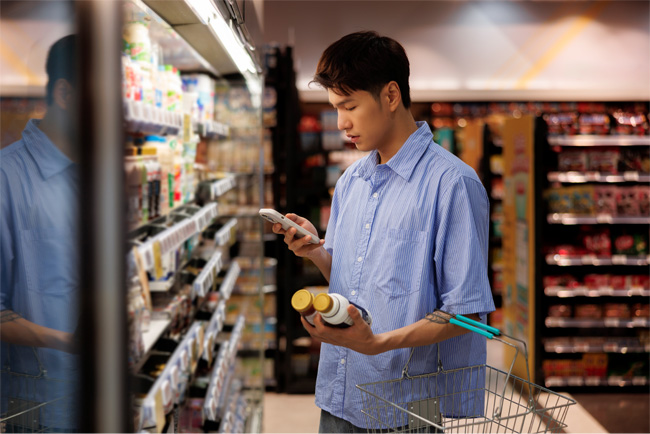
Nearly three-quarters of consumers (72%) would be motivated to scan an in-store QR code or smart label.
Retail technology investment continues
Retailers are expanding the use of technology across marketing and operations:
Expert take

“Shoppers are increasingly willing to trade their personal data, but only if it can lower their grocery bill or increase convenience. With that in mind, is your personalization moving beyond generic messaging to include proactive sale alerts and tailored experiences? Data collection strategies of the past are evolving, and winning brands should be focused on converting backend algorithms into direct, transparent cost savings and custom experiences for the consumer.”
— Kevin Bell, VP of Data & Analytics Strategy, Iridio by RRD
05 Single-source partnerships create a tangible advantage
55% of decision-makers ranked the cost of adapting to shifting consumer demands as the greatest threat to their business model over the next five years, closely followed by rising consumer affordability pressures (52%). The resulting strain on margins is forcing retailers and CPG brands to simplify operations and eliminate supply chain friction.
Fragmented, multi-vendor networks can increase execution time and overhead costs, leading to margin erosion. Organizations should look to transition to single-source partners who can integrate creative design, print, smart packaging, supply chain logistics, and more under a unified footprint.
End-to-end partnerships widely viewed as advantageous
100% of surveyed decision-makers see a competitive advantage in using one partner for packaging design, in-store print marketing, and direct supply chain distribution.
80% consider it a moderate to significant advantage.
Retailers prioritize supply chain logistics
Decision-makers project supply chain inventory tracking and automated fulfillment as their top capital investment for digital transformation next year (37%).
Collaboration barriers stall growth
The leading roadblock preventing real-time data collaboration between CPG brands and retailers is the inability to agree on uniform data points across inventory, digital apps, and in-store checkouts (30%).
Packaging priorities continue to evolve
As consumers trade down to private-label products, 53% of decision-makers report CPG brands are investing heavily in premium visual branding and specialty packaging.
Additionally, they report that brands are planning to invest in several areas of packaging innovation and material infrastructure in the next year to satisfy strict retail vendor mandates and consumer eco-demands:
Expert take

“Every decision-maker we surveyed agreed that single-source partnerships offer real strategic value. As fragmented supplier bases eat into profit margins, organizations need to take a hard look at consolidating their supply chains. Bringing marketing and operations under one provider cuts down on friction, protects your bottom line, and keeps the shopper journey consistent from start to finish.”
Kevin Poultney, Vice President, Strategic Accounts & Vertical Markets, RRD
TURNING INSIGHTS INTO ACTION
Iridio by RRD supports the core priorities in this research — providing strategic support to reduce operational friction and drive measurable outcomes across every channel.
CASE STUDY
Vendor Consolidation Frees Up Personnel, Puts Display Projects on Fast Track
READ THE CASE STUDY Vendor Consolidation Frees Up Personnel, Puts Display Projects on Fast Track
RESEARCH REPORT
The 2026 Grocery Perspectives Report
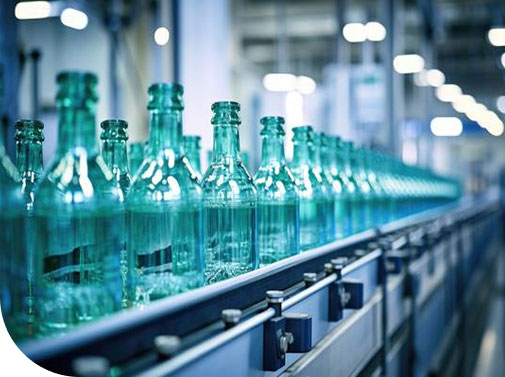
CASE STUDY
Innovative Label Redesign Fuels Beverage Company’s Expansion
READ THE CASE STUDY Innovative Label Redesign Fuels Beverage Company’s Expansion